
5 of the Best Ways to Fund Your Startup

5 of the Best Ways to Fund Your Startup

Our friends at LUCA wrote this blog post that we found so helpful! We’re sharing it here but you can find the original post on the LUCA site. Thank you to Christian Leithart for this valuable info!


Everybody has a good idea. The hard part is making it happen.


Roadblocks spring up at every turn. You need energy. You need support. You need time. And these aren’t even the most crucial ingredients for a newly hatched startup. Even with all the energy, support, and time in the world, you won’t get very far without the green blood that flows through every venture’s veins: money.


In this article, we explain five common ways startups get funding. We break down each type of funding into a few likely sources, along with the pros and cons of each.


1. Bootstrapping

Self-funding

Some people pool their savings in order to get their businesses off the ground. In the best case scenario, the company takes off and the “loan” is paid back quickly. This can be a risky move, since it might involve using your kids’ college fund to buy a used car wash, but it can also be profitable, since it ensures that the founder retains total ownership. It also passes the “skin in the game” test.

If this is your approach, it’s a good idea to pick a target company size for withdrawing your investment. It can be risky to keep a lot of your own money tied up in your business for a long time. Having a goal to work toward will help you stay alert and manage your investment well.


Family & friends

Some people pool not only their own savings, but everything they can get from their friends, relatives, neighbors, Uber drivers, and Amazon delivery people. Again, this can be a good approach because it keeps things personal, not strictly business (no offense, Don Corleone), which means that you are more heavily involved in the company. As we said, it’s good to have a little skin in the game.


Customers

Under certain circumstances, you can rely on your customers to fund your startup. This can work two ways. You could either create a subscription payment structure in which your customers pay monthly or annually or you could ask your customers to pay more for a new feature. Many software companies are good examples of the former (Netflix, Amazon, etc.). Apple’s yearly release of a shiny new iPhone is a good example of the latter. Customers are willing to pay extra for new features, which helps Apple develop their product’s next iteration.

Of course, both approaches presuppose a paying customer base. If you’re still revving the engine on your startup, this is not the best approach for you.


2. Loans

Bank loan/SBIC

Most banks will not loan money to a business unless that business has assets that the bank can use as collateral. You can sometimes get around this by putting up your personal assets (such as your house) as a guarantee. But there are other, less risky ways. The Small Business Administration (SBA), a federal program, can be a worthwhile approach. The SBA sponsors private equity fund managers, called Small Business Investment Companies (SBICs), who use their own funds, plus some government money, to invest in small businesses that meet their qualifications. Learn more about SBICs here.


Microloans

A startup can also gain funding through microloans, which are relatively small loans (think tens of thousands of dollars) usually offered to small business owners by non-profit organizations. The SBA has a description of microloan programs and a list of local lenders here.


Credit cards

As a last resort, you can put the expenses of starting up your business on a credit card (or several). You should be careful with this approach, since there are credit card companies who love to apply the screws to customers who can’t pay up. Hence, a last resort.


3. Grants

Government grants

The feds have a whole system for granting funds to programs and projects that benefit the general public. These typically fall into the following categories: other government organizations, education, public housing, non-profits, and some for-profit companies. The first step in the grant process is checking whether your organization is even eligible for a government grant. Next, find the grant you would like to apply for, fill out an application, and cross your fingers. If you do receive the grant, you will occasionally need to report on your organization’s progress. That may all sound like a lot of paperwork, and it is. This is a good approach if you are running an organization that is involved with some form of public welfare. For startups looking to make a profit, this is usually not the best approach.


Incubators/accelerators

Incubators and accelerators are programs, usually sponsored by universities or other social do-gooders, that take startups under their wings, giving them industry advice, training, and sometimes workspace and funding. A huge plus of this approach is that many incubators and accelerators work with local businesses, so you aren’t competing nationally for a limited number of spots. Also, a local connection may help the business relationship bear more fruit in the long term. Here is a helpful guide on how to prepare for an accelerator program.


Prizes

Every year there are dozens of competitions where entrepreneurs present their ideas for a chance at winning a grand prize. Shark Tank is probably what first comes to mind, but most of the contests are a lot less like reality TV, meaning they reward preparation and intelligence over flashy ideas. Here’s a list of business plan competitions happening in 2019.

The main benefit is that the cash you get from a prize isn’t a loan – you don’t have to pay it back. In that way, it functions more like a grant. You may have to do some serious legwork beforehand if you want a chance at winning, but if you can pull it off, it’s a great way to get some funding.


4. Investors

Venture Capitalists

Venture capitalists, aka VCs, are individuals or groups who specialize in funding startups, often to the tune of millions of dollars. Getting venture capital is a huge step up for many small business owners. It forces you to mature – quickly – because the train is leaving the station.

VCs usually bring enormous amounts of money with them, so they carry a lot of weight in any business they choose to involve themselves in. In extreme cases, a VC can even fire the founder of the company. Make sure that you understand the VCs goals and expectations for the business before accepting their funding.


Angel Investors

The main difference between angel investors and VCs is that they usually arrive at different stages in the startup process. A VC may take a profitable company and inject some cash to help it become more profitable. An angel typically comes aboard at an earlier stage, often guiding the financial decision-making.

You’ll hear this a lot: do your homework first. If you plan to court an angel investor, make sure you dot your legal I’s and cross your financial T’s. Also, in a perfect world, you would establish a firm friendship with an angel before asking them for money. That personal connection goes a long way.


Crowdfunding

Crowdfunding has become increasingly common in the last five years or so, thanks to sites like Kickstarter and GoFundMe. In case you need a refresher, it works like this: individual customers give you small donations in exchange for prizes, which can be anything from a branded refrigerator magnet to a personal invitation to a fancy restaurant. Crowdfunding has seen some success stories (Oculus Rift) and some flat-out failures.


The government has recently passed some laws related to crowdfunding (the 2012 JOBS act). Prior to 2012, a startup could not offer equity in the company as a reward for crowdfunding without making a full-on public offering. Thanks to the JOBS act, a company can raise up to $1 million through crowdfunding in exchange for equity without going public.


One way to avoid the pitfalls of crowdfunding is to give your contributors the product you’re creating in exchange for their support. In that case, you are essentially pre-selling your product to customers who have asked for it. Take a look at this article for more information on learning the crowd fundamentals.


5. Partnerships

License with a company

Not all businesses have to strike out on their own. Your company may create a product or provide a service that fits into an existing slot in another company’s product or service. For example, say you invent a paint brush that won’t dry hard and crusty no matter how much paint you leave on it. (Don’t ask how. If I knew, I’d already be a millionaire.) You could offer your product to Sherwin Williams or Home Depot to sell alongside their other painting supplies. You gain a larger market and a more secure customer base. And, of course, some percentage of the sales.

For a startup, a licensing deal would probably involve some initial funding to help you manufacture your product at the necessary scale. Still, a leg up is better than no legs at all.


Team up with one major customer

A similar strategy is to find one major customer committed to buying a certain quantity of your product (or paying for a certain quantity of services). It’s easier to see how this looks in an agricultural situation. Some restaurants buy meat from local farmers. Those farmers raise livestock knowing that they are guaranteed a buyer. Conceivably, the restaurant could pay the farmer ahead of time, thereby defraying the initial investment of buying an animal.

The possible downside to an arrangement like this is that, because you only have one customer, you are beholden to their whims. If they ask you to make changes in your production process, you have to comply. They may even ask you to give them exclusive rights to your product. It could be a great relationship, but it’s worth keeping an eye on.


Barter

We don’t do a lot of bartering in our day-to-day transactions, but in the world of startups, it’s a lot less uncommon. The trick is to get the “I’ll give you a cow for two bags of corn” picture out of your mind. Instead, think of situations like this: your window-washing business operates out of another company’s office and, in exchange, you wash the office windows once a week. Obviously, this is not a way to get funding directly, but it can definitely save costs. You can put your dollars to other uses.


How do I choose?

Which approach is right for your startup? The answer partly depends on your level of preparation. If you have some funds already, the best next step is probably a VC or angel investor. If you are starting from flat zero, you may want to bootstrap for a while until your company starts to gain some traction.

Ultimately, these approaches are not one-size-fits-all. Your startup may go through three or four of these funding sources in its lifecycle. The keys are organization and clarifying your goals before you begin. After all, if you don’t know where you’re headed, you won’t ever know when you’ve arrived.




Birmingham interior designer Stanley Stevenson Jr. chases entrepreneurial dreams at Forge

Birmingham interior designer Stanley Stevenson Jr. chases entrepreneurial dreams at Forge

Stanley Stevenson Jr. is not your typical interior designer in Birmingham. Find out how the husband and father of three is blazing his own trail in the interior design world.


The Journey to Stevenson Design


Stanley Stevenson Jr. started in the industry working at a local outdoor furniture company in the design department. There, he gained knowledge under seasoned designers by designing 3D furniture models and space planning for the company. He didn’t know it at the time, but this extensive experience would lay the groundwork he’d need for his future business.


Although he enjoyed the work, he knew he eventually wanted to form his own design company. So ten years ago, he took his first baby step and began the process by reading self-help books, researching and taking note of what worked and didn’t work for others.


He even started a blog, DaddyBe, about “living life on your own terms” in entrepreneurship. The blog took off, and now he’s also podcasting about his endeavors.

“The blog and podcast are my way to get my thoughts and ideas down about going through my entrepreneurship journey. It also lets me share my vision for my company,” said Stevenson.


Aspiring to Full-Time Entrepreneurship


In 2018, he set a time limit, giving himself six months to quit his day job. It was actually his wife, Kelley, that ultimately gave him the final boost of encouragement.


“She told me ‘You’re podcasting and blogging about starting your business, so do it!’ Once I knew I had her support and our family was all on the same page, I knew it was time to for me to start taking my plan seriously,” said Stevenson.

So on March 8, 2019, he left the security of his day job to pursue his dream of becoming a full-time interior designer and CEO of Stevenson’s Design.


“It was a scary jump—and I felt liberated, confident, scared and pumped all at the same time,” said Stevenson. “It is truly amazing the increase focus and creativity I’ve had since being able to devote my energy to this full time.”


Working From Forge


He started to work from Forge, the downtown co-working space at the Pizitz in 2017. Initially, he signed up for Forge’s after-hours plan. This allowed him access to the building during nights and weekends for a lower rate.


“What I can get done in two hours working at Forge takes me an entire week to do at home,” said Stevenson. “My workflow is smoother because I’m not distracted and I can focus on the task at hand.”


He’ll soon upgrade to a round the clock package at Forge granting his access to the co-working space 24/7.


Function + Aesthetic


Like every interior designer, Stevenson has a favorite go-to design aesthetic. Although he doesn’t put himself in a box stylistically, he describes his as mid-century modern.


Designers with such tastes are a dime a dozen in Birmingham. What sets him apart from others is his laser focus on utilizing space and function of a room. This is something he learned to do well while working in the corporate world, handling logistics, space planning and running a distribution center fast and efficiently.


“I carry that experience with me, and I want to first and foremost make the space something that people can use effectively,” said Stevenson.


On the residential side, he said it’s all about getting to know the family he’s working for and observing how they use the space. Oftentimes, he’s able to go into a house and create more useful space by simply moving things around.

Commercially, he said it’s again about the effective use of space, but also about the bottom line for the commercial client.


“I like to fix functionality problems, and make environments more holistic. I have a business mind that will always thing about how to design space to run fast and efficiently, keeping the big picture in mind.”


Stevenson’s Business Plan


Stevenson, who went to design school at Virginia College, studied both interior and graphic design in school. Once he started working, he realized many clients he worked for needed both graphic design and interior design work. Wanting to provide efficient solutions for his customers, he decided to incorporate both into his business.

“By offering both graphic and interior design, I’m able to offer an aestetic flow to clients, and they get the same look both with their logo, web design and interior design.”

Stanley Stevenson

The double design feature makes his business unique in Birmingham’s design world.

This, he said, allows him to help customers build a more cohesive brand image.


Stevenson’s Advice: Ignore Your Fear of Failure


Three weeks in to his giant leap to solo entrepreneurship, Stevenson says he’s confident he made the right choice to pursue growing Stevenson designs. He’ll take the NCIDQ (National Council for Interior Design Certification) exam in April, which  is the industry’s recognized indicator of excellence of design principles and commitment to the profession.


After that, he’ll continue to blog and podcast while growing his expanding client base for Stevenson Design.


“I always grew up thinking there is honor in working for somebody else, that that predictable lifestyle and fixed income was the way to go if you had a family to help support. Don’t let fear be the reason for not taking the step to go for it,” said Stevenson.


Your Big Idea: Birmingham’s Future Businesses

Your Big Idea: Birmingham’s Future Businesses

We started Your Big Idea at Forge to give Birmingham ideas and startups a place to receive feedback and network with the business community! Your Big Idea is not a competition. We simply want to support the big ideas coming out of Birmingham- and we’ve had some great ones so far! Let’s look back at our presenters over the last year at Forge. 


Conserv


In the hundreds of thousands of museums, galleries, libraries and archives around the world, conservators are fighting against environmental conditions (like temperature, humidity and light) to preserve our shared cultural heritage. Conserv is building the next generation of sensor and software tools to support these professionals. Austin Senseman and Nathan McMinn are the founders of Conserv. Learn more about Conserv here! 

Red Thread Consulting


Red Thread Consulting is a full-service agency providing philanthropy and community engagement management to help companies develop cohesive philanthropy plans, manage the details and leverage that engagement. Red Thread Consulting manages your community involvement so you can get back to business! Rebecca Dobrinski is the founder of Red Thread Consulting. Learn more here!

FIM Health


FIM (Food Is Medicine) is a meal delivery/brick and mortar concept that provides healthy, medically tailored meals to patrons suffering from various chronic illnesses but still want to enjoy delicious foods in a comfortable atmosphere. Andrea Walker is the founder of FIM Health. Learn more here!


Headhunter


Finding food help shouldn’t be as hard as people say. Finding a good job shouldn’t be frustrating either. Brent Skipper created Headhunter so more people can find great fits in a good career faster and easier. The Headhunter app is specifically designed for improving the job search with video resumes and video job listings. Learn more here!

College Prep U


College Prep U has a mission to provide parents and students with accurate information to help them properly prepare for education during and after high school. Learn more here!

ULECx Market


ULECx Market is an online communication board designed to broadcast all ambitions of the Birmingham business community. This includes leadership/business events, opportunities (part time jobs, careers and business ventures), resources (local podcasts, books, etc.) and a business directory of all market partners. Martin Briggs is the founder of ULECx Market. Learn more here!

till


There’s no more need to rush to the market on Saturday morning or sacrifice healthy/local eating when the market isn’t open. Rather than driving to the market, till brings the farmers market to you. Customers have the opportunity to pre-order their favorite fruits, vegetables and meats from top Birmingham area farms and have the foods dropped off at their doorstep. Will and Hayley DeShazo are the founders of till. Learn more about till here!

Pairit


Pairit is a concept of building a peer-to-peer marketplace platform aimed at pairing up content creators (photographers, videographers, bloggers, et.c) with consumers and businesses looking for quick, on-demand content. Thomas Coiner is the founder of Pairit! Learn more here!

Thank you to our sponsors for making this event happen each time: Gatehouse Law as a presenting sponsor and ServisFirst and Instagift as community sponsors! Your Big Idea will begin again in the fall! If you’re interested in pitching your idea, apply here! Also check out all of Forge’s upcoming events here.

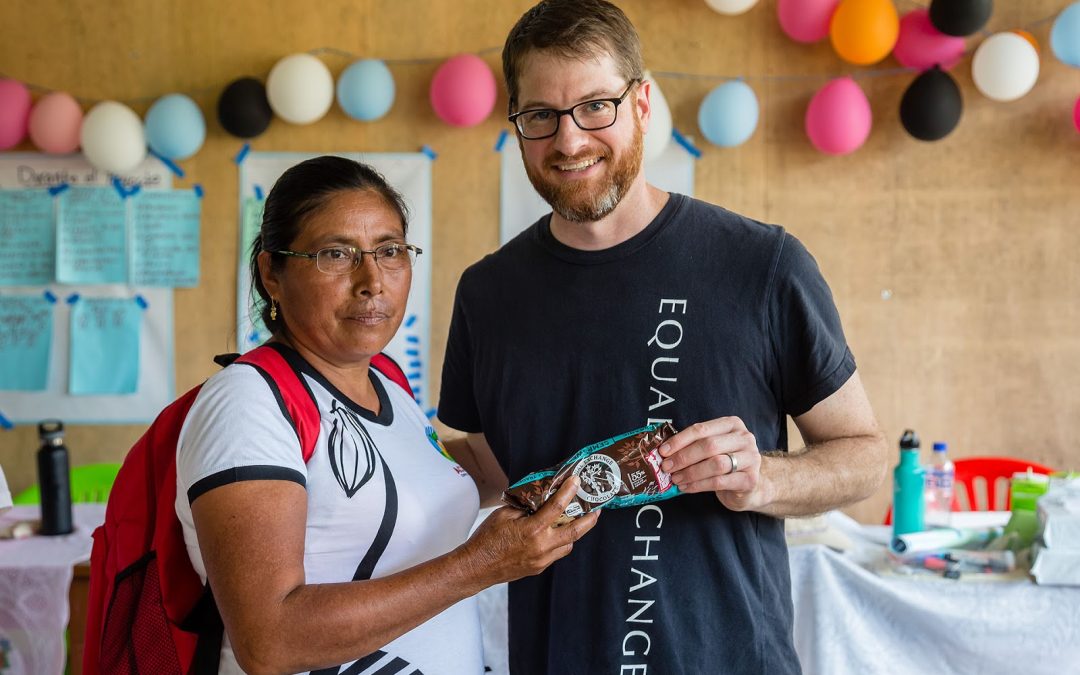
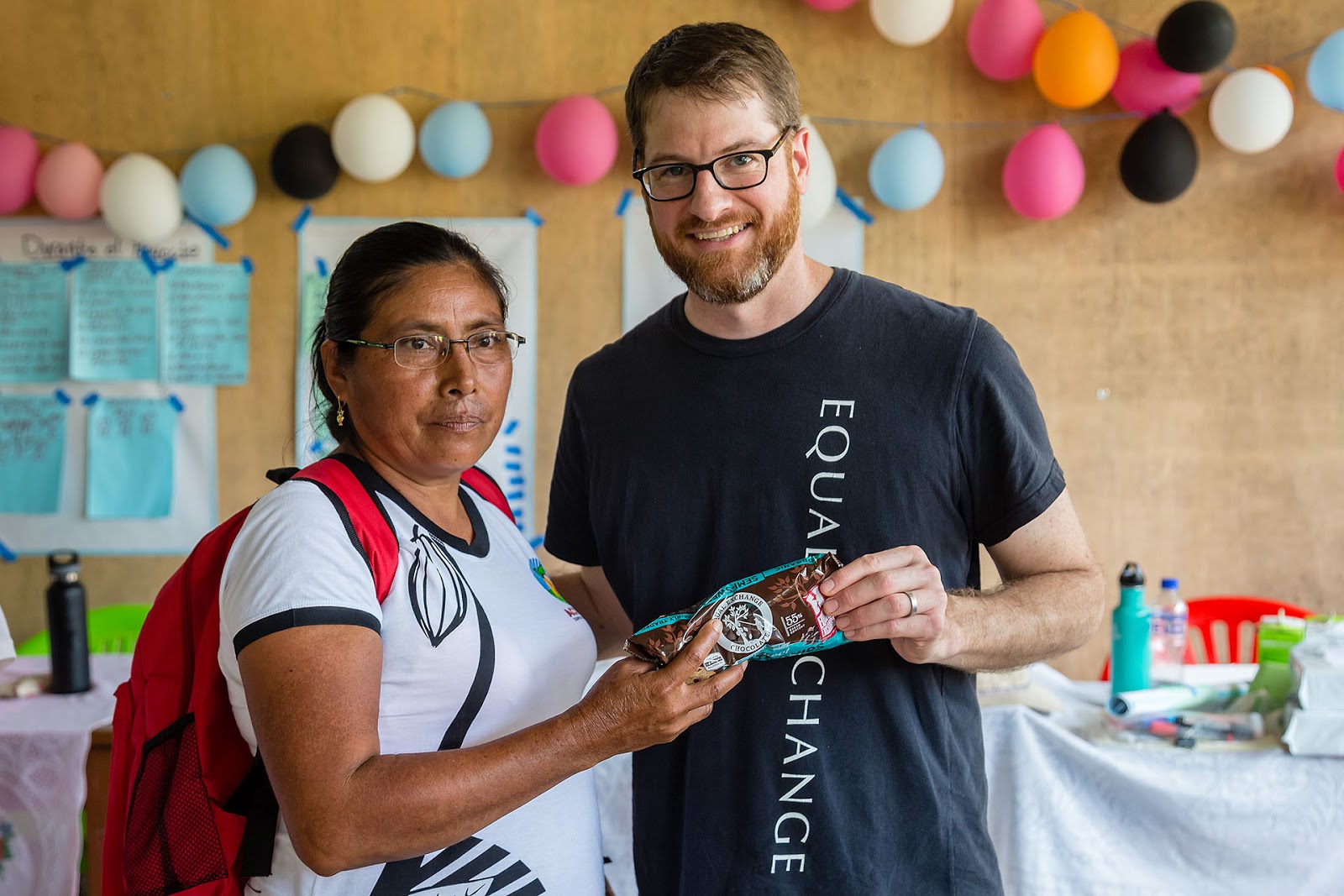
Dary Goodrich, Chocolate Products Manager at Equal Exchange, on fair trade and their new 92% Total Eclipse Bar

Dary Goodrich, Chocolate Products Manager at Equal Exchange, on fair trade and their new 92% Total Eclipse Bar

Bham Now recently featured Forge Member Dary Goodrich in an article- we’re reposting that content here! Read more about Dary’s role with Equal Exchange and why he works from Forge. 


Think about what’s in your pantry right now. Any coffee? Tea? Chocolate? Do you know where it came from? And I don’t mean which Birmingham grocery store. How was it made? Who’s hands touched it before yours? How much time was spent growing, cultivating and preparing that singular product for you to enjoy? And what benefits did the farmer whose energy, time and hard work went into making it get?


These are questions Equal Exchange wants to help answer by bridging the gap between producers and consumers—making sure more benefits get back to farmers who are growing the food we eat.


So, I sat down at Forge with Dary Goodrich, the Equal Exchange Chocolate Products Manager, to learn more about their mission and find out how Birminghamians can get involved.

Who is Equal Exchange?


Equal exchange is a fair trade for-profit worker-owned, cooperative based in Massachusetts. So, let’s break that down:

  • Fair trade = a way of doing business with developing countries to ensure fair prices are paid to producers for their products. Learn more about that here.
  • Worker owned co-op = “An alternative for-profit structure based upon standard democratic principles.” All of the employees own an equal portion of the company and receive equal share of any profits or losses. The “worker-owners” elect and serve as 6 of the 9 board of directors who hire/supervise management.
  • Other aspects to the co-op = They believe in one-person/one-vote equality at the governance level; open access to information/open-book management; free speech; and the equal distribution of resources/income.


“It’s an organization doing development but in a very different way…we’re going to change the business structure so that more is getting back to people who need it the most.”

Dary Goodrich

As one of the largest and earliest formed worker co-ops in the United States, Equal Exchange is comprised of roughly 130 worker-owners located all across the country. They got their start in coffee, pioneering the fair trade of that product in the U.S. Since their start over 30 years ago, they’ve expanded into tea, sugar, bananas, avocados, cocoa and chocolate. Which brings us to Dary.


Meet Equal Exchange’s Chocolate Products Manager 👋

Side Note: I mean, let’s take a moment to appreciate this job title… *rethinks entire career path*

“I was interested in the intersection between the environment and social justice, and food as a way those pieces come together.”

Dary Goodrich

After graduating, Equal Exchange had an opening—the perfect fit for Dary. And now, 17 years later, he’s running their chocolate program which includes cocoa products and chocolate bars.

“I’ve been able to grow this program. It’s very entrepreneurial—just figuring out what’s next? What are the right products? How do we think about where we should be going? And that’s always very exciting work.”

Dary Goodrich

With 100+ worker-owners, it’s not always easy—but it’s definitely worth it. 

“It’s making sure everyone is feeling educated enough and up to speed on the issues so that you as a group can make a big decision. Sometimes it can be slow to change, but it’s something we’re always trying to practice, learn and do better.”

Dary Goodrich

The Rewarding Part Isn’t Just the Chocolate


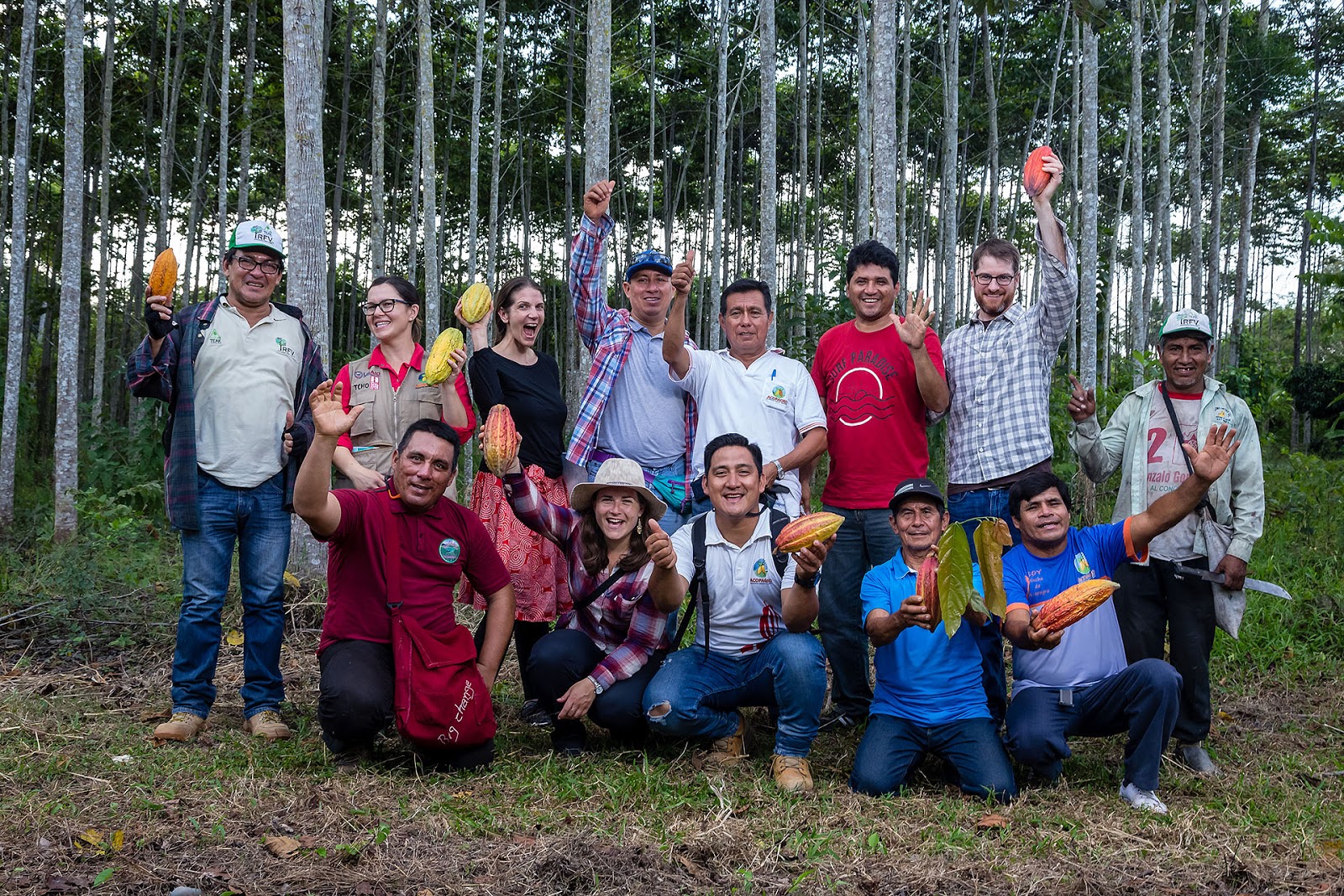
Travelling 3-4 times a year to visit farmer partners all over the world is another exciting part of Dary’s job.


“I feel so lucky that I get to actually go and visit farmers who grow this crop. I think people are very disconnected from where their food comes from. For me to see the reality of the work and struggles they have just to make a livelihood and build a community—especially with this crop (cocoa/chocolate) that’s often defined by the international market and depersonalized or commoditized—is an exciting piece of the job.”

Dary Goodrich

Where’s Home Base? 

When he’s not travelling, you can find Dary at Forge—the coworking space above the Pizitz Food Hall. But this isn’t his first coworking experience. Before moving to Birmingham, he worked in a co-working space in Atlanta, and before Forge, he worked at Innovation Depot downtown.

“A friend of mine connected me with Kim, and I talked to her about this idea… we kept in touch as she was still in the business development phase of this. When she launched I was like, yeah I’m in. Sign me up.”

Dary Goodrich

The best part of working at Forge, according to Dary, has been the community.

“I really enjoy being able to come to Forge to be around other people doing a wide range of work. It’s great to learn what other members are doing and to take advantage of their expertise through some of the educational events hosted at Forge.”

Dary Goodrich

Now, Back to the Important Stuff… Chocolate 🍫🍫🍫

What’s Dary’s current favorite? The new 92% Total Eclipse bar.


“It’s a really approachable and well-balanced bar for such a dark bar and I am excited that we are using beans for the first time from farmers in West Africa, specifically from Togo.”

Dary Goodrich

They’re brand new and not in stores yet, so we’ll keep you updated! And you can find Equal Exchange chocolate products in Birmingham at Sojourns Fair Trade, Whole Foods and Target, or shop all products online here!


Get Involved 👏

Feeling inspired and want to invest in a good cause? Get involved with Equal Exchange—they need your support. Who knows… you might end up at Forge working beside Dary. Bonus: lots of chocolate would be involved.

What is a Virtual Mailbox and who benefits from it?

What is a Virtual Mailbox and who benefits from it?


 We can all agree that having a commercial business address will make you look more professional. And a Virtual Mailbox membership is an easy way to get your business address. But what does a Virtual Mailbox really entail?


A virtual mailbox service like Anytime Mailbox offers a permanent business street address for receiving mail. Once mail is received, the mail is scanned and an image of the mail envelope is uploaded into your digital mailbox account. You can then view and request to have selected mail pieces opened and the contents scanned or shredded. 


You can also have your mail forwarded to another address, which is useful if you receive your new credit cards, driver license, or passport. With a virtual mailbox, you can essentially read and manage your mail online from anywhere in the world.


The Top 4 Advantages of a Virtual Mailbox:


1. Maintain a mailing address that never changes even if your physical location changes or if you move 


2.  Store digital mail documents for future reference or for tax purposes


3.  Automate tedious administrative tasks when it comes to snail mail and package delivery


4.  Simplify mail processing by centralizing all your mail in one single location without having to deal with mail being sent to multiple offices or people


A virtual mailbox is an affordable option for small businesses and startups! You can have the appearance of having a physical office without the need to have a commercial office space. 


Virtual offices are also ideal for people who run a business out of their home office and want to keep their personal information private. 


Click here to see more information about a Virtual Mailbox membership at Forge through Anytime Mailbox.